
Introduction
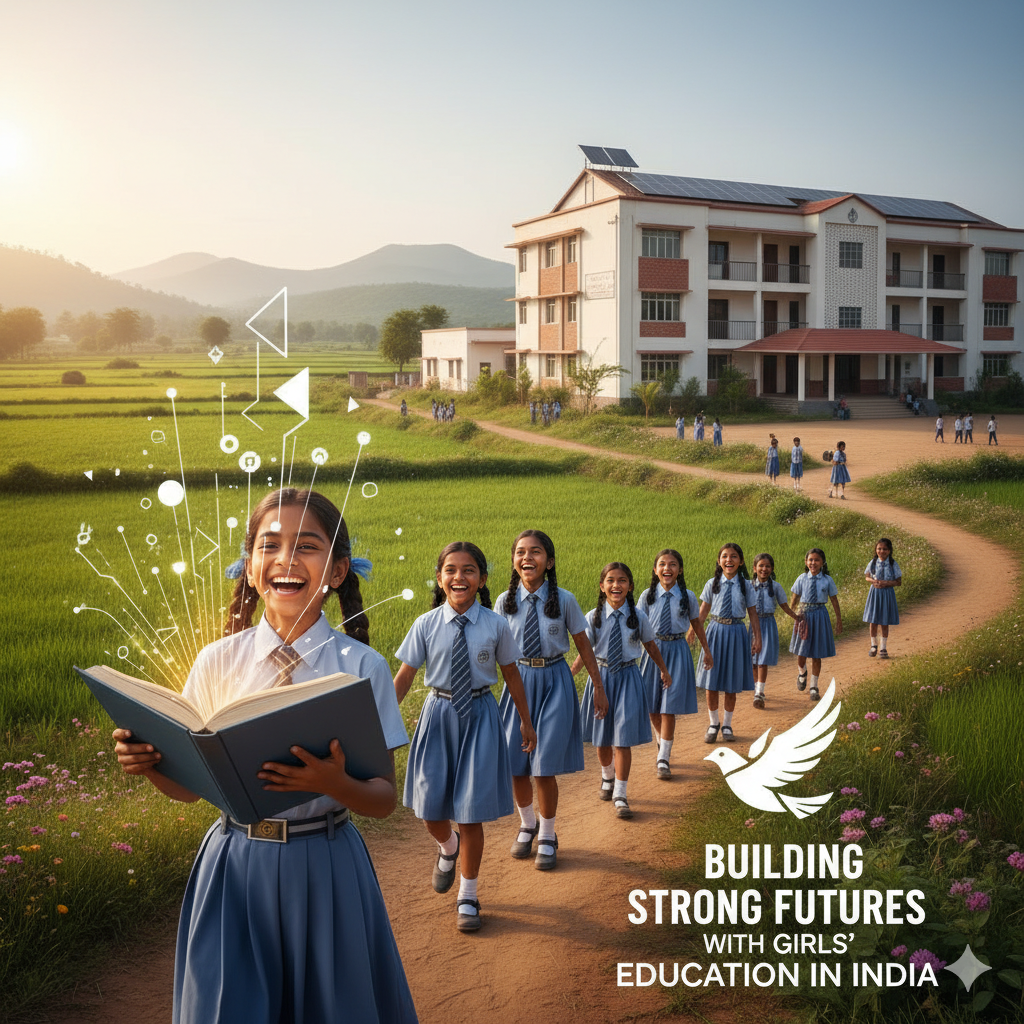
Education is the foundation of a progressive society, and girls’ education in India is a key lever to drive social upliftment, economic development, and the achievement of gender equality. While there has been much progress recently, there are still major barriers to providing quality education to every girl child. This paper will discuss the reasons why girl child education is important, its implications, types of government programs to support girl child education, and how educating and saving girl children relates to the future of India.
The importance of girls education in India
The importance of girls’ education goes beyond personal financial gain or benefits; it can help transform communities and the nation. Educated girls are less likely to marry at an early age, are more likely to be healthy and have healthy children, and will contribute to the family income while making contributions to their community and nation’s economy. According to the most recent government data, attaining gender parity in education could add upwards of $770 billion in GDP to India’s economy by 2025, illustrating the significance of girl child education to the economic future of the country.
Still, challenges such as poverty, cultural traditions, child marriage, and perceptions of insecurity lead many families to keep their daughters out of school. These factors are indicative of the need for focused and public targeted interventions in the area of free education for all girls and supportive schooling environments.
Benefits of the Girls education in india
The benefits of education for girls are considerable and diverse:
Empowerment: Educated girls develop self-efficacy and the competencies necessary to contribute to and actively participate in various aspects of social and political life.
Improved health: Education is associated with lower infant and maternal mortality and delays in childbearing.
Economic development: Educated girls contribute to the workforce and to breaking the cycle of poverty.
Social change: Educated women can challenge gender norms and advocate for equal treatment. They may even help to save the girl child.
Community impact: Educated girls impact their families and communities and can help to encourage change in their communities.
Rewritten Article on Girl Child Education: Challenges and Success Stories
While we have made advancements in girl child education, the article on girl child education must still address challenges regarding girl child education. For instance, there are still rural parts of India where enrollment rates for girls are fairly low, still due to financial and safety concerns. As it is stated in the article, “In some districts, girls drop out just after grade 5 because there are no separate toilets; improving safety for girls would go a long way.”
On the positive side, government programs such as Beti Bachao Beti Padhao (Save Girl, Educate Girl), launched in 2015, are improving awareness and enrollment. Usha, from a village in Rajasthan, testified girls used to marry very young; now 35% of girls complete 12th grade and go to college. This empowers girls to aspire to be out of the village; other girls are looking after her as a role model.
The Importance of Girls Education
Educating a girl is not only a right of an individual but also a right of a nation. Education for a girl child is important because it results in:
Ending the cycle of poverty by providing employment and other resources that allow a family to prosper.
Having healthier homes since mothers make better health choices when knowledgeable about their health.
Building resilient communities because educated girls will become resilient women leaders of the community.
Getting women to equality by raising awareness of deep-rooted biases that impact girls.
Education provides girls with the knowledge to build a life and shape the future of a nation.
Girl’s Education Is Supported by the Indian Government
The Indian government understands the significance of education in India and has established many schemes to support girls’ education, including:
Free Education for Girl Child under the Right to Education Act.
Kasturba Gandhi Balika Vidyalaya Scheme for residential school programs for marginalized girls.
The National Scheme of Incentives to Girls for Secondary Education strictly provides funding.
Sukanya Samriddhi Yojana saves for girls’ education.
Beti Bachao Beti Padhao is a campaign that raises awareness and improves the girl-child ratio and the educational needs of girls.
When we consider these schemes that are happening both by the government alongside NON-GOVERNMENTAL ORGANIZATIONS and COMMUNITIES, saving the girl-child and providing free education to the child protection is an important way to develop a nation.
Removing Obstacles to Girls Education in India
Girls education in India faces many challenges, even though the benefits are clear, and governments have taken strong positions in support of girl child education. Personal and societal norms and perceptions about girls and their gender roles are a major impediment to education for many girls. In a society where families value boys’ education more highly than girls’, many families see girls as future homemakers rather than as contributing partners to the economy. Child marriage, along with safety concerns when traveling to school, is an additional impediment to education.
Solving the problem requires a complicated solution. There are many ways to engage the community: education programs focused on girls’ education and the importance of gender equality help to change mindsets; infrastructure improvements—safe means of transportation, sanitation facilities, and girl-friendly schools—will help create a better learning environment; and empowering local women as leaders and educators can inspire their families as well as girls to value education.
To conclude,
Investing in girls education in India is more than achieving an educational standard; it is a tool with the power to alter society and economic conditions. The value found in educating the girl child cannot be stressed enough; girls education in India leads families to be healthier, communities to grow effectively, and India itself to thrive. It will take all of us to “save the girl child and educate the girl child,” and this must be an ongoing effort from family, community, government, and civil society to eliminate barriers, provide support, and build an inclusive future. The time is now—because when girls are educated, it leads to a brighter future for India.
Read More: https://julieure.com/importance-of-the-child-protection-act-in-ind